Thursday, April 21, 2011
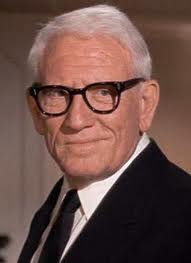
April 21, 2011 - Spencer Tracy
(Spencer Tracy was one of my favorite actors and the clip below is from the last few minutes of "Guess Who's Coming to Dinner", and the year 1967. The film was eventually remade but the quality of the script and the actors was nowhere near the original. Tracy died 2 days after wrapping the film and the dedication to work ethic and his professionalism shows clearly in the speech he gives at the end. He did it in one take and from the look in his eyes when he glances at Katherine Hepburn, he understood he had a limited amount of time left.)
Spencer Bonaventure Tracy (April 5, 1900 – June 10, 1967) was an American theatrical and film actor, who appeared in 75 films from 1930 to 1967. In 1999, the American Film Institute ranked Tracy ninth among the Greatest Male Stars of All Time. He was nominated for nine Academy Awards for Best Actor in all, winning two. While in college, Tracy decided on acting as a career. He studied acting in New York and appeared in a number of Broadway plays, finally achieving success in the 1930 hit The Last Mile. Director John Ford was impressed by his performance and cast him in Up the River with Humphrey Bogart. Fox Film Corporation signed him to a long term contract, but after five years of mostly undistinguished films, he joined the most prestigious movie studio of the time, Metro-Goldwyn-Mayer, where his career flourished. He won back-to-back Academy Awards for Captains Courageous (1937) and Boys Town (1938). In 1942, he co-starred with Katharine Hepburn in Woman of the Year. The teaming lasted for decades, both on-screen and off. They fell in love and maintained an affair that lasted for decades. (Tracy was already married and, as a Catholic, would not consider divorce despite affairs with actresses like Loretta Young, Joan Crawford, Myrna Loy, Ingrid Bergman and Gene Tierney) One of the greatest of cinematic couples, they made eight more films together, ending in 1967's Guess Who's Coming to Dinner, which was completed shortly before his death. Tracy was born in Milwaukee, Wisconsin, the second son of John Edward Tracy, an Irish American Catholic truck salesman, and Caroline Brown, a Protestant turned Christian Scientist. He was raised a Roman Catholic.Tracy's paternal grandparents, John Tracy and Mary Guhin, were born in Ireland. His mother's ancestry dates back to Thomas Stebbins, who immigrated from England in the late 1630s. Tracy attended six high schools, starting with Wauwatosa East High School in 1915 and St. John's Cathedral School for boys in Milwaukee the following year. The Tracy family then moved to Kansas City, where Spencer was enrolled at St. Mary's College, Kansas, a boarding school in St. Marys, Kansas 30 miles west of Topeka, Kansas, then transferred to Rockhurst, a Jesuit academy in Kansas City, Missouri. John Tracy's job in Kansas City did not work out, and the family returned to Milwaukee six months after their departure. Spencer was enrolled at Marquette Academy, another Jesuit school, where he met fellow actor Pat O'Brien. The two young men left school in spring 1917 to enlist in the Navy after the American entry into World War I, but Tracy remained in Norfolk Navy Yard, Virginia, throughout the war. Afterwards, Tracy continued his high school education at Marquette Academy then transferred to Northwestern Military and Naval Academy near Lake Geneva, Wisconsin. He finished his last few credits needed to graduate at Milwaukee's West Division High School (now Milwaukee High School of the Arts) in February 1921. Tracy attended Ripon College from February 1921 to April 1922. Ripon he made his first stage appearance, in a 1921 Commencement play entitled The Truth, and decided on acting as a career. While touring the Northeast with the Ripon debate team, he auditioned for and was accepted to the American Academy of Dramatic Arts in New York. His first Broadway role was as a robot in Karel Čapek's R.U.R. (1922), followed by five other Broadway plays in the 1920s. In 1923 he married actress Louise Treadwell. They had two children, John and Louise (Susie). John Tracy died at age 82 at his son's ranch in Acton, California, in 200He was also nominated for San Francisco (1936), Father of the Bride (1950), Bad Day at Black Rock (1955), The Old Man and the Sea (1958), Inherit the Wind (1960), Judgment at Nuremberg (1961), and posthumously for Guess Who's Coming to Dinner (1967). Tracy and Laurence Olivier share the record for the most nominations for the Academy Award for Best Actor. Tracy's reputation for versatility and naturalness are based on the twenty years (1935–1955) he acted at Metro Goldwyn Mayer and for the subsequent dozen years when he was an independent actor. Yet the twenty-five films he made prior to his move to MGM are notable in that they demonstrate the range and diversity of characters he would continue to deliver through his post-Fox career (and which would earn him two Academy Awards and nine nominations) He was also nominated for San Francisco (1936), Father of the Bride (1950), Bad Day at Black Rock (1955), The Old Man and the Sea (1958), Inherit the Wind (1960), Judgment at Nuremberg (1961), and posthumously for Guess Who's Coming to Dinner (1967). Tracy and Laurence Olivier share the record for the most nominations for the Academy Award for Best Actor. Tracy's reputation for versatility and naturalness are based on the twenty years (1935–1955) he acted at Metro Goldwyn Mayer and for the subsequent dozen years when he was an independent actor. Yet the twenty-five films he made prior to his move to MGM are notable in that they demonstrate the range and diversity of characters he would continue to deliver through his post-Fox career (and which would earn him two Academy Awards and nine nominations) During his later years, Tracy's health worsened after he was diagnosed with diabetes, exacerbated by his alcoholism. On 21 July 1963, less than eight months after finishing the filming of It's a Mad, Mad, Mad, Mad World, Tracy suffered a congested lung condition, forcing him to pull out of Cheyenne Autumn and The Cincinnati Kid. Edward G. Robinson replaced him for both films. He spent most of the next four years inactive as his health further declined. On 10 June 1967, two days after completing his last film, Guess Who's Coming to Dinner, with Hepburn, Spencer Tracy died of a heart attack at age 67, having long suffered from emphysema since the early 1950s from his daily smoking habit. The film was released in December, six months after his death. In 1988, the University of California, Los Angeles' Campus Events Commission and Susie Tracy created the UCLA Spencer Tracy Award. The award has been given to actors in recognition for their achievement in film acting. Past recipients include William Hurt, James Stewart, Michael Douglas, Denzel Washington, Tom Hanks, Sir Anthony Hopkins, Jodie Foster, Harrison Ford, Anjelica Huston, Nicolas Cage, Kirk Douglas, Jack Lemmon and Morgan Freeman. The main character Carl from Pixar's film Up was primarily based on a combination of Spencer Tracy and Walter Matthau, because, according to director Pete Docter, there was "something sweet about these grumpy old guys" Tracy appeared in 75 feature films, and several short films. With Katharine Hepburn he starred in nine feature films, one of the most successful screen pairings in film history. Nine of the films he starred in were nominated for Best Picture: San Francisco (Oscar Nomination), Libeled Lady, Captains Courageous (Oscar), Test Pilot, Boys Town (Oscar), Father of the Bride (Oscar Nomination), Judgment at Nuremberg (Oscar Nomination), How the West Was Won and Guess Who's Coming to Dinner (Oscar Nomination). He was nominated for the Academy Award for Best Actor on nine occasions, and won the award in 1937, for Captains Courageous, and in 1938, for Boys Town. He won a Golden Globe Award for The Actress (1953) from a total of four nominations. He was awarded a BAFTA Award for Best Actor in a Leading Role for his posthumously released performance opposite Hepburn in Guess Who's Coming to Dinner (1967). Spencer Tracy -"Guess Who's Coming to Dinner?"
Wednesday, April 20, 2011
April 22, 2011 - Anne Murray - "Snowbird"
(Don Whittemore was responsible for breaking this huge hit in Cleveland in 1970 and despite Don Graham's claims, I cannot locate a 78 rpm!!!)
Morna Anne Murray CC, ONS (born June 20, 1945) is a Canadian singer in pop, country and adult contemporary styles whose albums have sold over 54 million copies. Murray was the first Canadian female solo singer to reach #1 on the U.S. charts, and also the first to earn a Gold record for one of her signature songs, "Snowbird" (1970). She is often cited as the woman who paved the way for other Canadian international success stories such as Céline Dion, Sarah McLachlan and Shania Twain She is also the first woman and the first Canadian to win "Album of the Year" at the Country Music Association Awards for her 1984 album A Little Good News. Murray has received four Grammy Awards, 24 Juno Awards (she holds the record for the most Junos awarded to an artist), three American Music Awards, three Country Music Association Awards and three Canadian Country Music Association Awards. She has been inducted into the Canadian Country Music Hall of Fame, the Juno Hall of Fame, The Songwriters Hall of Fame and the Hit Parade Hall of Fame. She is a member of the Country Music Hall of Fame Walkway of Stars in Nashville, and has her own star on the Hollywood Walk of Fame in Los Angeles and on Canada's Walk of Fame in Toronto In 1965 Anne Murray appeared on the University of New Brunswick student project record "The Groove" (500 pressed). She sang two songs on the record - "Unchained Melody" and "Little Bit of Soap". On the label her name was misspelled "Anne Murry" While at university, Murray was encouraged to audition for the 1960s CBC musical variety television show Singalong Jubilee, but Murray was not offered a singing position. Two years later she received a call from Singalong Jubilee co-host and associate producer, Bill Langstroth, and was asked to return for a second audition. Following that second audition, Murray was cast for the show. After a summer of singing in local venues across the Maritimes, Murray began teaching Physical Education at a high school in Summerside, Prince Edward Island. After one year of teaching, she was offered a spot on a television show Let's Go, and returned to Singalong Jubilee. As a regular member of the "Singalong Jubilee" cast, Murray appeared on the Singalong Jubilee Vol. III soundtrack and Our Family Album - The Singalong Jubilee Cast records released by Arc Records. The show's musical director, Brian Ahern, advised Murray that she should move to Toronto and record a solo album. Murray's first album, What About Me, was produced by Ahern in Toronto and released in 1968 on the Arc label. Morna Anne Murray was born on June 20, 1945, in the small coal-mining town of Springhill, Nova Scotia. Her father, James Carson Murray, was the town doctor and her mother, Marion Margaret Murray, was a registered nurse who focused her life on raising her family and community charity work. Murray was raised as the only girl in a family of five brothers - David, Daniel, Harold, Stewart and Bruce. After expressing an early interest in music, she studied piano for six years; by age fifteen, she began taking voice lessons. Every Saturday morning, she took a bus ride from Springhill to Tatamagouche, Nova Scotia, for her singing lesson with her teacher, Karen Mills. One of Murray's earliest performances was of the religious song "Ave Maria" at her high school graduation in 1962. Following high school, Murray attended Mount Saint Vincent University in Halifax for one year. She later studied Physical Education at University of New Brunswick in Fredericton. After receiving her degree, Murray taught physical education at a high school in Summerside, Prince Edward Island for one year.
Murray married Bill Langstroth on June 20, 1975, and gave birth to two children: William, in 1976, and the better-known of her children, Dawn Langstroth, in 1979, a singer/songwriter and artist who has recorded with her mother a number of times, including the duet "Let There Be Love" in 1999 for Murray's What A Wonderful World album. Anne and Dawn were featured in a mother-daughter duet of "Nobody Loves Me Like You Do" on Murray's hit 2008 U.S. CD (released in late 2007 in Canada), Anne Murray Duets: Friends & Legends, Murray's highest-charting release in nine years. In recent years, Murray has faced many personal challenges: her departure from Capitol Records after more than a quarter-century; the apparent suicide of Gene MacLellan, the composer of her first hit single, "Snowbird", which hit #1 in both Canada and the U.S. and virtually established her international singing career overnight; the death of her beloved manager and close friend, Leonard T. Rambeau, from colon cancer; the separation and subsequent divorce from her husband, Bill; her daughter Dawn's battle with anorexia (Dawn and Anne reluctantly did the US talk-show circuit to raise awareness of the deadly affliction); and most recently, the loss of her best friend to cancer (she recorded her 2005 album All of Me as a tribute to her). She emerged from those personal adversities in 1999 with her best-selling album in 20 years, What a Wonderful World, which was certified Platinum, and her 2002 CD Country Croonin’ was certified Gold by the RIAA. Murray's 2007/2008 Anne Murray Duets: Legends & Friends CD was the second-highest debuting album on Billboard's Top 200 Albums chart (U.S.) for the week ending February 2, 2008, and was Murray's highest-charting album in the U.S. since What a Wonderful World was released in 1999. The CD also debuted on Billboard's Top Country Albums chart at #8 and Top Internet Albums chart at #3 for the same week. Murray has always kept strong ties with her hometown, Springhill, Nova Scotia, located about an hour south of Moncton, New Brunswick, and two hours north of Halifax, Nova Scotia. The Anne Murray Centre, located in Springhill, houses a vast collection of memorabilia from both her personal life and professional career in a series of award winning, three-dimensional displays. The Anne Murray Centre, which opened on July 28, 1989, is a registered Canadian charity. As a non-profit association, all the revenue generated from its operation is used to provide employment for local people and for its ongoing maintenance. The Anne Murray Centre has successfully fostered tourism in the area and has promoted awareness of the music of Nova Scotia and Canada
Anne Murray was also instrumental in the construction of the Dr. Carson and Marion Murray Community Centre in Springhill, Nova Scotia. Murray served as the honorary chair of the fundraising campaign to replace the town arena that collapsed after a peewee hockey game in 2002. Named for her parents, the Dr. Carson and Marion Murray Community Centre sports an NHL-size ice sheet with seating for 800 people, a walking track, multi-purpose room, community room with seating for up to 300, and a gym. The Dr. Carson and Marion Murray Community Centre has become an integral part of the Springhill community since opening on September 15, 2004. Murray's personal success combined with her visible love and support for Springhill was featured in the article, “Women of Success – Impact on The Economy of Their Hometowns,” in Progressive Choices – Canadian Women In Business magazine (Summer/Fall 2004 edition). When a devastating tsunami brought tragedy on December 26, 2004, Anne Murray joined other Canadian music stars in the Canada for Asia Telethon, a three-hour, tsunami relief concert broadcast on CBC Television (January 13, 2005) to support CARE Canada’s efforts. Bryan Adams and Murray closed the show with a duet, "What Would It Take" Environmental awareness is another area for which Murray is passionate, and she has been a public supporter of renowned Canadian environmentalist and geneticist Dr. David Suzuki’s Nature Challenge.
Anne Murray has also been involved in a variety of charitable organizations. In addition to being the Honorary National Chairperson of the Canadian Save The Children Fund, she has served as a spokeswoman for many charities throughout her career - most recently Colon Cancer Canada. On May 20, 2009, Colon Cancer Canada launched the inaugural Anne Murray Charity Golf Classic. Over $150,000 was raised through the event Murray's father, Dr. Carson Murray, died in 1980 at the age of 72 from complications from leukemia. Her mother, the former Marion Margaret Burke, died April 10, 2006, at the age of 92 after suffering a series of strokes during heart surgery. A longtime golf enthusiast, Murray made history in October 2003 at the Turning Stone Resort & Casino in Verona, New York, by becoming the first woman to score a hole-in-one on the 108-yard, par 3, 17th hole at the Kaluhyat Golf Club. On May 11, 2007, Golf For Women magazine named Murray the world's best female celebrity golfer. Anne Murray - "Snowbird"
Morna Anne Murray CC, ONS (born June 20, 1945) is a Canadian singer in pop, country and adult contemporary styles whose albums have sold over 54 million copies. Murray was the first Canadian female solo singer to reach #1 on the U.S. charts, and also the first to earn a Gold record for one of her signature songs, "Snowbird" (1970). She is often cited as the woman who paved the way for other Canadian international success stories such as Céline Dion, Sarah McLachlan and Shania Twain She is also the first woman and the first Canadian to win "Album of the Year" at the Country Music Association Awards for her 1984 album A Little Good News. Murray has received four Grammy Awards, 24 Juno Awards (she holds the record for the most Junos awarded to an artist), three American Music Awards, three Country Music Association Awards and three Canadian Country Music Association Awards. She has been inducted into the Canadian Country Music Hall of Fame, the Juno Hall of Fame, The Songwriters Hall of Fame and the Hit Parade Hall of Fame. She is a member of the Country Music Hall of Fame Walkway of Stars in Nashville, and has her own star on the Hollywood Walk of Fame in Los Angeles and on Canada's Walk of Fame in Toronto In 1965 Anne Murray appeared on the University of New Brunswick student project record "The Groove" (500 pressed). She sang two songs on the record - "Unchained Melody" and "Little Bit of Soap". On the label her name was misspelled "Anne Murry" While at university, Murray was encouraged to audition for the 1960s CBC musical variety television show Singalong Jubilee, but Murray was not offered a singing position. Two years later she received a call from Singalong Jubilee co-host and associate producer, Bill Langstroth, and was asked to return for a second audition. Following that second audition, Murray was cast for the show. After a summer of singing in local venues across the Maritimes, Murray began teaching Physical Education at a high school in Summerside, Prince Edward Island. After one year of teaching, she was offered a spot on a television show Let's Go, and returned to Singalong Jubilee. As a regular member of the "Singalong Jubilee" cast, Murray appeared on the Singalong Jubilee Vol. III soundtrack and Our Family Album - The Singalong Jubilee Cast records released by Arc Records. The show's musical director, Brian Ahern, advised Murray that she should move to Toronto and record a solo album. Murray's first album, What About Me, was produced by Ahern in Toronto and released in 1968 on the Arc label. Morna Anne Murray was born on June 20, 1945, in the small coal-mining town of Springhill, Nova Scotia. Her father, James Carson Murray, was the town doctor and her mother, Marion Margaret Murray, was a registered nurse who focused her life on raising her family and community charity work. Murray was raised as the only girl in a family of five brothers - David, Daniel, Harold, Stewart and Bruce. After expressing an early interest in music, she studied piano for six years; by age fifteen, she began taking voice lessons. Every Saturday morning, she took a bus ride from Springhill to Tatamagouche, Nova Scotia, for her singing lesson with her teacher, Karen Mills. One of Murray's earliest performances was of the religious song "Ave Maria" at her high school graduation in 1962. Following high school, Murray attended Mount Saint Vincent University in Halifax for one year. She later studied Physical Education at University of New Brunswick in Fredericton. After receiving her degree, Murray taught physical education at a high school in Summerside, Prince Edward Island for one year.
Murray married Bill Langstroth on June 20, 1975, and gave birth to two children: William, in 1976, and the better-known of her children, Dawn Langstroth, in 1979, a singer/songwriter and artist who has recorded with her mother a number of times, including the duet "Let There Be Love" in 1999 for Murray's What A Wonderful World album. Anne and Dawn were featured in a mother-daughter duet of "Nobody Loves Me Like You Do" on Murray's hit 2008 U.S. CD (released in late 2007 in Canada), Anne Murray Duets: Friends & Legends, Murray's highest-charting release in nine years. In recent years, Murray has faced many personal challenges: her departure from Capitol Records after more than a quarter-century; the apparent suicide of Gene MacLellan, the composer of her first hit single, "Snowbird", which hit #1 in both Canada and the U.S. and virtually established her international singing career overnight; the death of her beloved manager and close friend, Leonard T. Rambeau, from colon cancer; the separation and subsequent divorce from her husband, Bill; her daughter Dawn's battle with anorexia (Dawn and Anne reluctantly did the US talk-show circuit to raise awareness of the deadly affliction); and most recently, the loss of her best friend to cancer (she recorded her 2005 album All of Me as a tribute to her). She emerged from those personal adversities in 1999 with her best-selling album in 20 years, What a Wonderful World, which was certified Platinum, and her 2002 CD Country Croonin’ was certified Gold by the RIAA. Murray's 2007/2008 Anne Murray Duets: Legends & Friends CD was the second-highest debuting album on Billboard's Top 200 Albums chart (U.S.) for the week ending February 2, 2008, and was Murray's highest-charting album in the U.S. since What a Wonderful World was released in 1999. The CD also debuted on Billboard's Top Country Albums chart at #8 and Top Internet Albums chart at #3 for the same week. Murray has always kept strong ties with her hometown, Springhill, Nova Scotia, located about an hour south of Moncton, New Brunswick, and two hours north of Halifax, Nova Scotia. The Anne Murray Centre, located in Springhill, houses a vast collection of memorabilia from both her personal life and professional career in a series of award winning, three-dimensional displays. The Anne Murray Centre, which opened on July 28, 1989, is a registered Canadian charity. As a non-profit association, all the revenue generated from its operation is used to provide employment for local people and for its ongoing maintenance. The Anne Murray Centre has successfully fostered tourism in the area and has promoted awareness of the music of Nova Scotia and Canada
Anne Murray was also instrumental in the construction of the Dr. Carson and Marion Murray Community Centre in Springhill, Nova Scotia. Murray served as the honorary chair of the fundraising campaign to replace the town arena that collapsed after a peewee hockey game in 2002. Named for her parents, the Dr. Carson and Marion Murray Community Centre sports an NHL-size ice sheet with seating for 800 people, a walking track, multi-purpose room, community room with seating for up to 300, and a gym. The Dr. Carson and Marion Murray Community Centre has become an integral part of the Springhill community since opening on September 15, 2004. Murray's personal success combined with her visible love and support for Springhill was featured in the article, “Women of Success – Impact on The Economy of Their Hometowns,” in Progressive Choices – Canadian Women In Business magazine (Summer/Fall 2004 edition). When a devastating tsunami brought tragedy on December 26, 2004, Anne Murray joined other Canadian music stars in the Canada for Asia Telethon, a three-hour, tsunami relief concert broadcast on CBC Television (January 13, 2005) to support CARE Canada’s efforts. Bryan Adams and Murray closed the show with a duet, "What Would It Take" Environmental awareness is another area for which Murray is passionate, and she has been a public supporter of renowned Canadian environmentalist and geneticist Dr. David Suzuki’s Nature Challenge.
Anne Murray has also been involved in a variety of charitable organizations. In addition to being the Honorary National Chairperson of the Canadian Save The Children Fund, she has served as a spokeswoman for many charities throughout her career - most recently Colon Cancer Canada. On May 20, 2009, Colon Cancer Canada launched the inaugural Anne Murray Charity Golf Classic. Over $150,000 was raised through the event Murray's father, Dr. Carson Murray, died in 1980 at the age of 72 from complications from leukemia. Her mother, the former Marion Margaret Burke, died April 10, 2006, at the age of 92 after suffering a series of strokes during heart surgery. A longtime golf enthusiast, Murray made history in October 2003 at the Turning Stone Resort & Casino in Verona, New York, by becoming the first woman to score a hole-in-one on the 108-yard, par 3, 17th hole at the Kaluhyat Golf Club. On May 11, 2007, Golf For Women magazine named Murray the world's best female celebrity golfer. Anne Murray - "Snowbird"
Tuesday, April 19, 2011
April 21, 2011 - Frank Sinatra & Quincy Jones
(Our good friend "Dandy" Don Whittemore sent in this link to a Frank Sinatra/Quincy Jones recording session from someone "who was there" - Enjoy!)
Jones first worked with Frank Sinatra when he was invited by Princess Grace to arrange a benefit concert at the Monaco Sporting Club in 1958. Six years later, Sinatra hired him to arrange and conduct Sinatra's second album with Count Basie, It Might as Well Be Swing (1964). Jones conducted and arranged 1966's live album with the Basie Band, Sinatra at the Sands. Jones was also the arranger/conductor when Sinatra, Sammy Davis, Jr., Dean Martin, and Johnny Carson performed with the Basie orchestra in St. Louis, Missouri, in a benefit for Dismas House in June 1965. The fund-raiser was broadcast to a number of other theaters around the country and eventually released on DVD. Later that year, Jones was also the arranger/conductor when Sinatra and Basie appeared on The Hollywood Palace TV show on October 16, 1965. Nineteen years later, Sinatra and Jones teamed up for 1984's L.A. Is My Lady, after a joint Sinatra-Lena Horne project was abandoned.
Frank & Quincy Recording session
April 21, 2011 - Charlie O'Donnell
Charles John "Charlie" O'Donnell (August 12, 1932 – November 1, 2010) was an American radio and television announcer, primarily known for his work on game shows. Among them, he was best known for Wheel of Fortune, where he worked from 1975 to 1980, and again from 1989 until his death. O'Donnell, a native Philadelphian, began his career as a teenager at WCHA in Chambersburg, Pennsylvania. In 1956, he worked as program director at WHAT, a 250-watt R&B station in Philadelphia, where he discovered and launched the career of future Philadelphia radio legend Hy Lit. When WIBG became top-40 in 1957, O'Donnell was named news director. In 1958, he became the sidekick of Dick Clark on WFIL-TV's afternoon dance program, American Bandstand. This led to several stints as a disc jockey on Los Angeles radio (most notably on legendary Pasadena station KRLA, 1964–67), and later as news anchorman on Los Angeles television station KCOP-TV. KCOP was the home of The Joker's Wild and Tic-Tac-Dough during its initial syndicated reigns. He is also featured on the Simon and Garfunkel song 7 O'Clock News/Silent Night as the news announcer. He also made a full-time career as an announcer on many television shows throughout the decades, with such series as The Joker's Wild, Tic-Tac-Dough, Bullseye and The $100,000 Pyramid (again working with Dick Clark). He also served as announcer for the American Music Awards, the Emmy Awards and the Academy Awards. O'Donnell was also known as the announcer of the game show Wheel of Fortune. He filled this role from 1975 to 1980, acted as a substitute for his successor, Jack Clark, and returned to the show permanently several months after Clark's death in 1988. Between Clark's death and O'Donnell's return, disc jockey M.G. Kelly announced the show for most of its sixth season. Among the game show companies O'Donnell had worked for as a primary announcer were Stefan Hatos-Monty Hall Productions (1973–1977), Merv Griffin Enterprises/Sony Pictures Television (1975–80 and 1989–2010), Barry & Enright Productions (1981–86), and Barris Industries (1986–89 and earlier on occasion). He has also announced game shows for Mark Goodson-Bill Todman Productions (Card Sharks, Trivia Trap, Family Feud, To Tell the Truth); Bob Stewart Productions, and for Hill-Eubanks Group's All Star Secrets and The Guinness Game. He and John Harlan filled in for Rod Roddy on different occasions on Press Your Luck.On the morning of November 1, 2010, O'Donnell was reported to have died in his sleep overnight from heart failure at his home in Sherman Oaks, California. He is survived by his wife, Ellen. Shortly before his death, the show began rotating announcing duties among several guest announcers, including Jeopardy! announcer Johnny Gilbert. Wheel of Fortune host Pat Sajak described O'Donnell as "the perfect voice of the show." O'Donnell's last announced episode aired on Friday, October 29, 2010, three days before his death. Pat Sajak & Vanna White Say Good Bye to Charlie
Monday, April 18, 2011
April 20, 2011 - KYA - San Francisco
It was May 1, 1958, when San Francisco's 1260/KYA first burst on the Bay Area scene with the greatest Top 40 music played anywhere. Over the next quarter century, popular personalities like Emperor Gene Nelson, Russ "The Moose" Syracuse, "Big Daddy" Tom Donahue, Johnny Holliday, Tom Campbell, Bwana Johnny, Mike Cleary, Gary Shaffer, Ed Hider and Chris Edwards helped elevate the original 1260 KYA to legendary status.
In 1964 then radio Disc Jockey Casey Kasem of KYA Radio in San Francisco released a spoken word recording about a letter he recieved from a girl who's desire was to meet The Beatles. This was the prelude to the American Top 40 "Long Distance Dedication" feature on the sindicated show some six years later.
April 19, 2001 - We Five
We Five was a 1960s folk rock musical group based in San Francisco, California. Their best-known hit was their 1965 remake of Ian and Sylvia's "You Were on My Mind", which reached #1 on the Cashbox chart, #3 on the Billboard Hot 100, and #1 on the Adult Contemporary chart. The original group split after recording their second album in 1967, but a re-formed band produced three more albums between 1968 and 1977. The original group is probably best remembered for the vocal qualities of its lead singer Beverly Bivens. Michael Stewart formed We Five after graduating from Pomona Catholic High School and attending Mt. San Antonio College. He was the brother of John Stewart of the Kingston Trio and came from Claremont, California. When Michael was a student at the University of San Francisco in 1964, he formed We Five as a quartet, although it soon added another member. The group played adult rock 'n roll, pop jazz, Broadway show tunes, and Disney tunes. Stewart did all the arrangements, which ranged from These Are My Favorite Things, in a style which reflected Bach, to Very Merrily Un-birthday. He put in several additional hours working on arrangements after the five band members worked together for five or six hours each day. The ensemble played acoustic guitars, electric guitar and bass and multi-part sang harmonies. The original quintet line-up, which grew out of a band called the Ridgerunners, included:
- Michael Stewart (Baritone-Bass, 5-String Banjo, 6-String Acoustic Guitar, 9-String Amplified Guitar)
- Beverly Bivens (Low Tenor to High Soprano, Rhythm Guitar)
- Jerry Burgan (Tenor, 6-String Acoustic Guitar)
- Peter Fullerton (Tenor, Acoustic & Fender Bass)
- Bob Jones (Baritone-Tenor, 6-String Electric Jazz Guitar, 12-String Electric Guitar).
The Herb Alpert owned label, A&M Records, responded to the new popularity of folk and rock music by adding new artists starting in 1965 to its existing line-up of middle-of-the road material turned out by Alpert's Tijuana Brass, the Baja Marimba Band, and Brasil '66. In addition to We Five, Alpert's label released albums by Boyce and Hart, the Garden Club, Chris Montez, and the The Merry-Go-Round. We Five's first album produced a major hit with the title tune, Stewart's re-arrangement of the Ian and Sylvia song "You Were on My Mind". Stewart made several changes to the original Sylvia Tyson composition, and the song went directly to the Billboard Top Five in 1965. It sold over one million copies, and was awarded a gold disc. In February 1966 We Five was nominated for a Grammy for Best Performance By A Vocal Group (for "You Were on My Mind"), against the Beatles among others, but they lost the award to the Anita Kerr Quartet. They were also the first commercial folk-rock artist to record music for Coca-Cola. The group added a touring drummer named John Chambers so that it could tour behind its hit. After completing their second album, Make Someone Happy, later in 1966, lead singer Beverly Bivens decided to leave the group. The group nevertheless had a hit from this album in 1967 with its arrangement of the popular Kingston Trio folk tune "Let's Get Together," which reached #31 on the Billboard Hot 100 (and was later a Top Five hit and a million-seller for The Youngbloods as "Get Together"). To continue, We Five replaced Bivens with Debbie Graf Burgan (wife of guitarist Jerry Burgan) and added a full-time drummer in Mick Gillespie for live performances. We Five was among the artists included in a preliminary injunction issued by the Los Angeles Superior Court in April 1968. The edict prohibited pirating of A&M artists, including the Tijuana Brass and The Sandpipers. The action was directed against Superba Tapes, Inc., of Lancaster, California. The company had copied tapes of the recordings and sold them to the public without paying royalties to the artists. The group would record two albums with Debbie Burgan singing lead, 1969's Return of the We Five for A&M and 1970's Catch the Wind for Vault. Neither album came close to the success of the earlier Bivens material. In 1970, Stewart, Jones and Fullerton all quit We Five, breaking up the original band.
April 18, 2011 - RKO Radio Chain
Not all great radio stations emanated from such cities as Los Angeles, New York or Chicago. WRKO, the flagship station of the RKO General radio chain, was the red-hot Top 40 radio station in Boston, Massachusetts. WRKO went on the air as a Top 40 station on March 17, 1967, having switched from WNAC, which had been a talk station, but playing oldies to segue into the new WRKO.
WRKO spent its beginning years as a Bill Drake-formatted station, as its co-owned stations including KHJ, KFRC, and CKLW. But WRKO was more personality-driven than most Drake operations. With the perfect combination of more music and fabulous jocks, WRKO's ratings skyrocketed within only a few weeks! In fact, WRKO was such a hot station, that at one time it even out-rated every other station in its own RKO General chain of Drake-formatted stations.
WRKO became known as "The Big 68" in 1968, to match other Drake-formatted stations in the RKO General chain with similar nicknames, like CKLW which was called "The Big 8."
The format brought WRKO so much income, that in September of 1968, the stations - AM, FM and TV - moved out ofo their old 21 Brookline Avenue studios, and into the new Government Center, on Bullfinch Place.
As FM stations became popular in the early 1970s, WRKO's FM (WROR) had its own Bill Drake "Hit Parade" oldies format. WROR's ratings were no match for WRKO's. In fact, the station was a money-loser. While one might believe it would had made every bit of sense to move WRKO's successful format to its FM station, RKO General's corporate thinking was similar to that of most companies who had both an AM and FM station in the same market: "If we do that, we'll be competing against our own station!" So the decision was made to leave things alone.
In late 1971, in order to attempt to head off the competition of FMs, Bill Drake decided to WRKO began to play more album cuts and modified its jocks' delivery: less hype, more mellow, as if to imitate the now-successful AOR station in Boston, WBCN. That the station That the format included 40 album cuts, shows that WRKO was taking that new direction very seriously. WVBF wasn't so mellow, but it featured album cuts within its Top 40 mix of music, all with a unique Top 40 jock presentation, jingles and all. It was at that time that WRKO added a short list of top-selling albums to its "WRKO Thirty" surveys.
Drake wanted the same format for KHJ, but since jocks like "The Real" Don Steel and Robert W. Morgan couldn't change their style to the new format, Johnny Williams was sent to KHJ to work evenings (as Cat Simon), to show the rest of the staff the style Drake wanted.
In the autumn of 1973, consultant Paul Drew was promoted to Vice President of RKO Radio. He recommended WAVZ/New Haven, CT Program Director, John Long, to program WROR. At that time, a company could own just two stations per market. In what is today considered a suicidal decision, RKO General decided to sell off its FM stations in the markets where they had combos in order to get into more markets. They sold WHBQ-FM in Memphis, and KFRC-FM in San Francisco. They tried to sell WROR, but the sale was hindered when a minority group filed a petition to deny the sale to Cecil Heftel. Heftel and RKO General agreed to withdraw the offer. Paul Drew indeed wanted John Long to come to Boston and "make it a winner." But "the tire people," as RKO General's management was known sarcastically, was apparently too conservative a group to budge.
In mid-1973, Bill Drake had a fallout with RKO General left the company, and was replaced by Paul Drew. Scotty Brink, "AOR" Program Director, was replaced by KFRC/San Francisco's Gerry Peterson. WRKO "re-birthed" itself by spending a weekend of playing oldies, and when the weekend was over, there was a new high-energy on-air staff in place, complete with TM Shotgun jingles, and a return to a straight Top 40 format, even while the WRKO music surveys still listed albums as well as the top singles.
In 1975, WRKO's on-air delivery returned to a more "mature" approach, with less hype; more one-to-one communication. At the same time, the national Top 40 music charts were reflecting more-mellow music selections, hallmarks of the mid 1970s, until disco music began to make a showing in 1976. WRKO's sound was a straight blend of the day's typical Top 40 station; while the emphasis was not on disco music, the hottest disco hits were added to the standard, mellow Top 40 offerings.
In 1978, under new Program Director Harry Nelson (who had returned from KFRC after being one of WRKO's high-energy jocks from 1973 to 1976), the station took a more "Adult Contemporary" approach, turning down the general tempo of its music and presentation. Mistakenly believing long-time, exceptionally-popular morning man Dale Dorman would always be identified as a Top 40 jock, Dale was terminated. He went on to Framingham-Boston's Top 40 WVBF/105.7, and shortly thereafter to Medford-Boston's "Kiss 108" (WXKS 107.9) where he remains on the air to this day. As the curse of Babe Ruth, I believe that particular decision marked the beginning of the end for WRKO.
From March 5, 1979 to the end of WRKO in 1981, Charlie Van Dyke was brought in from KLIF in Dallas to see what magic, if any, he could perform in keeping WRKO alive. Charlie was known as a turnaround specialist. Knowing his AM station had lost most of its younger audience to FMs, he made the decision to turn WRKO into an Adult Contemporary station, emphasizing more of a "personality" presentation. Special programming was added in the evening, as well as a talk show. In September of 1980, WHDH's Norm Nathan (probably the most laid-back air personality in Boston) to be the station's "Morning Magazine" jock. The show was heavy on personality, heavy on features, and light on music. Norm stayed on until May 25th of that year. WRKO's air talent began to come and go very quickly, as the station tried to hold any ground it could.
Charlie Van Dyke was summoned to a high-level RKO General meeting in New York, where he revealed that the station ad little choice than to move to a News-Talk format. The executives agreed, and asked Charlie what the call letters of the "new" station should be. Charlie replied that WRKO was by now a heritage station, and that the call letters should remain the same. Yes, Charlie Van Dyke saved WRKO — at least its name. Ironically, to make the transition from music to talk, former WMEX Good Guy Mel Miller became interim Program Director. And the deed was done. (Miller was named Program Director of WROR in April, 1982. Previously, he'd had a similar position at WEEI for he past 13 years.)
The day the music died on WRKO was at 6 PM on September 26, 1981, when the station became Talkradio 68. Today, WRKO is very successful as a talk station. But there was nothing — nothing at all — like WRKO, when it was New England's highest-rated Top-40 station. In fact, at one time it even out-rated every other sister station in its RKO General chain — including the great KHJ and CKLW! Like the Curse of Babe Ruth in Red Sox baseball, when WRKO terminated its own Babe, Dale Dorman, the station became and remained a perennial loser when he left. Whether warm memories of WNAC, WRKO, and WRKO-FM are still fresh in your mind as they are in mine, or you have only heard about The BIG 68
Here are a few of the famous "Drake Jingles"
Subscribe to:
Posts (Atom)


