Sunday, May 1, 2011

May 2, 2011 - "I Fought the Law"

 
 One of the great "Rock & Roll Mysteries" as Bobby Fuller died just as his first hit was becoming a Pop Classic - It would later be covered by "The Clash".  He was 23.

Robert Gaston "Bobby" Fuller (October 22, 1942 – July 18, 1966) was an American rock singer, songwriter, and guitar player best known for his singles "I Fought the Law" and "Love's Made a Fool of You," recorded with his mid-1960s group, the Bobby Fuller Four.. Just after "I Fought The Law" became a Top 10 hit, Fuller was found dead in an automobile parked outside his Hollywood apartment. The Los Angeles deputy medical examiner, Jerry Nelson, performed the autopsy. According to Dean Kuipers:  "The report states that Bobby's face, chest, and side were covered in "petechial hemorrhages" probably caused by gasoline fumes and the heat. He found no bruises, no broken bones, no cuts. No evidence of beating." Kuipers further explains that boxes for "accident" and "suicide" were ticked, but next to the boxes were question marks. Despite the official cause of death, some commentators believe Fuller was murdered.
Confusion has reigned over Fuller's death, with many misinterpreting the coroner's verdict of asphyxiation and the police's report: “Deceased was found lying face down in front seat of car: a gas can, 1/3 full, cover open; windows were all rolled up and doors shut, not locked; keys not in ignition." This has been construed by some as Fuller swallowing gasoline when, in fact, asphyxiation would have been caused by a deadly build-up of gasoline fumes in a sealed environment.  Erik Greene, a relative of the late singer Sam Cooke, has cited similarities in the deaths of Cooke and Fuller. The only one which survives scrutiny is that both attended the same night club. Fuller bandmate, Jim Reese, suspected that Charles Manson may have had something to do with Fuller's death but has never provided credible evidence. A sensationalist crime website has speculated that the LAPD may have been involved because of Bobby's connection to a Mafia-related woman. Fuller is buried in the Forest Lawn Memorial Park in Los Angeles.   Bobby Fuller on "Shindig"

Friday, April 29, 2011

May 1, 2011 - Connie Stevens - "Sixteen Reasons"


Here's another of the dozens of hits Don Graham worked on  -
I  think Connie owes him a few bucks!


Sixteen Reasons (Why I Love You) is a song written by Bill and Doree Post which in 1960 reached #3 via a recording by Connie Stevens. The composers: Bill and Doree Post, were a husband-and-wife team from Kansas who had several single releases on Crest Records but their own version of "Sixteen Reasons" was not released until 1963: Doree Post was then deceased having been claimed by stomach cancer on 24 July 1961.  Stevens' single - arrangement and accompaniment by Don Ralke  was issued in December 1959 with the Robert Allen composition "Little Sister" being the intended A-side - another version of the last-named song by Cathy Carr was issued as a single at the same time  - but it was as "Sixteen Reasons" that Stevens' single debuted at #89 on the Billboard Hot 100 dated 1 February 1960,  to reach #3 on the chart dated 9 May 1960.   "Sixteen Reasons" also afforded Stevens' a hit in the UK over the spring and summer of 1960 despite at least three cover versions by British singers, specifically Sheila Buxton, Shani Wallis and Marion Ryan. After reaching #9 - its overall UK peak - in May 1960[,  Stevens' single re-entered the top 20 at #17 that June, spending 12 weeks on the chart in all.   Total sales for Connie Stevens' "Sixteen Reasons" single are estimated at two million units. The sheet music for the song was also a bestseller in both the US and the UK. "Sixteen Reasons" was a popular song on the American Forces Network in Germany that summer. A recounting of sixteen reasons for being in love, beginning "The way you hold my hand", "Sixteen Reasons" was Stevens' second Top 40 hit, the precedent being a duet with  "77 Sunset Strip" co-star Edd Byrnes: '"Kookie, Kookie (Lend Me Your Comb)'", a novelty spoken word number which reached #4.  Stevens' had her success with "Sixteen Reasons" despite her label Warner Bros. handicapping her promotion of the single: as the song was not published by MPHC the label refused to allow Stevens to perform the song on Hawaiian Eye and also prevented her from singing it on The Ed Sullivan Show.  Although Stevens' would continue to record for Warner Bros until 1972 - with a brief tenure at MGM Records in 1968 - none of her singles subsequent to "Sixteen Reasons" would reach the Top 40; her last appearance on the Billboard Hot 100 would be in 1965. Professionally Stevens has downplayed her identity as the singer of a "golden oldie", stating in 2005: "I never did 'Sixteen Reasons' in my stage act. It was really a kids' song aimed at 12-year-old girls. It would be a little silly for me to do it now."                CONNIE STEVENS - "Sixteen Reasons"

April 30, 2011 - Les Crane - "Desiderata"


(This one of the many hit records that veteran record promoter Don Graham worked on. Despite serious efforts, we were unable to locate a live performance by Les Crane, who passed away in 2008. Below is the song with some imagery.)

Desiderata (Latin: "desired things", plural of desideratum) is a 1927 prose poem by American writer Max Ehrmann (1872-1945). It exhorts the reader to "be at peace with God, whatever you conceive Him to be", and to "keep peace with your soul". "With all its sham, drudgery, and broken dreams," wrote Ehrmann, "it is still a beautiful world." The text, largely unknown in the author's lifetime, came to the attention of the public first for its usage in a church hymnal which dated it, mistakenly, to the 17th century, then for its being found on the bedside table of Adlai Stevenson upon his death in 1965, and then Les Crane's spoken-word recording in 1971 and 1972. The poem was actually written in 1927.  In approximately 1959, the Reverend Frederick Kates, rector of Saint Paul's Church in Baltimore, Maryland, used the poem in a collection of devotional materials he compiled for his congregation. At the top of the handout was the notation: "Old Saint Paul's Church, Baltimore A.D. 1692." In the 1960s, the poem was widely circulated with the claim that it had been found in Baltimore, Maryland's Saint Paul's Church, and that it had been written by an anonymous author in 1692, the year of the founding of Saint Paul's.  When Adlai Stevenson died in 1965, a guest in his home found a copy of Desiderata near his bedside and discovered that Stevenson had planned to use it in his Christmas cards.  The publicity that followed lent widespread fame to the poem, and to the poem's connection with Saint Paul's Church of Baltimore. In late 1971 and early 1972, Les Crane's spoken-word recording of Desiderata was a major hit in the United States and Great Britain, peaking at #8 on the Billboard charts and #6 on the Melody Maker such. The makers of the record assumed, as had many others, that the poem was very old and in the public domain, but publicity surrounding the record led to clarification of Ehrmann's authorship, and his family eventually received royalties. In August 1971, the poem was published in Success Unlimited magazine, again without authorization from Ehrmann's family. This led to a lawsuit against the magazine's publisher, Combined Registry Company. In 1976, the 7th Circuit Court of Appeals ruled that the copyright for the poem had been forfeited due to the poem's authorized publication in the 1940s without a copyright notice. Thus the court ruled that the poem is, in fact, in the public domain.  "Desiderata" - Les Crane"

Thursday, April 28, 2011

April 28, 2001 - "Peppermint Rainbow"

 The group visited the WRKO studios many times and the late Skip  Harris loved playing in the control room.  "Will You Be Staying After Sunday?" was one of Bill Drake's famous "Top of the Hour" hits.  (This is the only performance clip which exists and is a portion of the "King Family"  TV Show -  cuts out at end)

The Peppermint Rainbow were an American sunshine pop group from Baltimore, Maryland. They formed in 1967 under the name New York Times, and played local gigs in the mid-Atlantic states before changing their name to the Peppermint Rainbow in 1968. They were signed to Decca Records at the behest of Cass Elliot, who saw them play and sang with them on-stage when they performed a medley of The Mamas & the Papas tunes.  Under Decca the group was produced by Paul Leka; their first single was "Walking in Different Circles" b/w "Pink Lemonade", but it did not chart. Their second single, "Will You Be Staying After Sunday", hit the U.S. Billboard Hot 100 chart, peaking at #32 in 1969. It sold over one million copies, and was awarded a gold disc. Their third release, "Don't Wake Me Up in the Morning, Michael", hit #54 the same year. Their LP, Will You Be Staying After Sunday, barely missed the Top 100 of the album charts, peaking at #106, and in 1970 the band split up.  The group made an appearance on The Generation Gap television quiz show.        "Will You Be Staying After Sunday?" - From "King Family TV Show
  • Bonnie Lamdin - vocals
  • Pat Lamdin - vocals
  • Doug Lewis - guitar
  • Anton Corey - percussion
  • Skip Harris (deceased) - bass

Wednesday, April 27, 2011

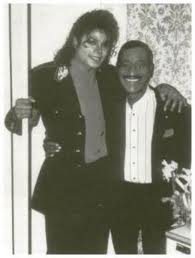
April 27, 2011 - Michael Jackson - " Sammy Davis Jr Tribute"

  
Michael Jackson performed this song only once. The occasion was the Sammy Davis Jr. 60th Anniversary TV Special. The song was written especially for the broadcast. Videotaped at the Shrine Auditorium in Los Angeles. Air Date: February 4, 1990. - Sammy Davis, Jr.  passed away two month's later.
Michael Jackson - "You Were There"

Friday, April 22, 2011

April 22, 2001 - Johnny Rivers - "Secret Agent Man"

 Johnny Rivers (born John Henry Ramistella, November 7, 1942, New York) is an American rock and roll singer, songwriter, guitarist, and record producer. His styles include folk songs, blues, and revivals of old-time rock 'n' roll songs and some original material. Rivers's greatest success came in the mid and late 1960s with a string of hit songs (including "Seventh Son", "Poor Side of Town", "Summer Rain", and "Secret Agent Man"), but he has continued to record and perform to the present.  The Ramistella family moved from New York to Baton Rouge, Louisiana when Johnny's father lost his job while Johnny was still young. Without any formal music lessons, he began playing guitar, which he learned from his father and uncle, at the age of eight, and was influenced by the distinctive music of Louisiana. While in junior high school he started sitting in with a band called The Rockets led by Dick Holler who later wrote a number of songs including "Abraham, Martin and John" and "Snoopy Vs. The Red Baron". Ramistella formed his own band, The Spades, in junior high school and made his first record at age 14, while still a student at Baton Rouge High School.  Some of their music was recorded on the Suede label as early as 1956. On a trip back to New York in 1958, he met Alan Freed who advised him to change his name, so Johnny Ramistella had the Baton Rouge attorney Arthur J. Cobb change his name to Johnny Rivers after the Mississippi River that flows near Baton Rouge  Freed also helped Rivers score some recording contracts on the Gone label  From March 1958 to March 1959, Rivers released three records which did not sell well. In 1959, Rivers returned to Baton Rouge. While playing throughout the American South along side Southern comedian Brother Dave Gardner, one evening in Birmingham, Rivers met Audrey Williams, the first wife of Hank Williams and she took Rivers to Nashville, where he recorded two more records. They were not successful either, but Johnny stayed in Nashville as a songwriter and demo singer for $25 a demo. While in Nashville, Rivers worked alongside Roger Miller. By this time, Rivers' self-esteem about his singing diminished, and he thought he would never make it as a singer, therefore writing, and not singing, moved to the forefront   In 1960, Rivers met fellow Louisianan James Burton, the guitar player for Ricky Nelson. Burton later recommended one of Rivers' songs to Nelson, who went on to record it. In 1961, Rivers went to Los Angeles to meet Nelson, and then relocated there, working as a songwriter and studio musician. In 1963, Rivers's big break came when he temporarily filled in for a jazz combo at Bill Gazzarri's nightclub; the temporary gig became long-term due to positive customer response. In 1963, Rivers recorded the theme song for the American broadcast of a British television series, "Danger Man," which starred Patrick McGoohan. At first, Rivers balked at the idea, feeling that he did not have the talent to make a record on an international label, but he eventually relented. The American version of the show was titled "Secret Agent", and the song "Secret Agent Man" reached number 3 on the Billboard Hot 100 charts in 1966.  It sold one million copies, achieving gold disc status  In 1964, Elmer Valentine gave Rivers a one-year contract to open in his new nightclub, Whisky a Go Go, on Sunset Strip in West Hollywood.  The Whisky a Go Go opened three days before The Beatles released "I Want to Hold Your Hand"   and the British Invasion knocked almost every American artist off the top of the charts. But Rivers was so popular that producer Lou Adler decided to issue Johnny Rivers Live At The Whisky A Go Go.  The live album reached #12 on the charts and the single "Memphis" reached the US Hit Parade #2 spot   in July 1964. It sold over one million copies, and was awarded a gold disc.  According to Elvis Presley's friend and employee Alan Fortas, Presley played his friend (Rivers) a test pressing of "Memphis" that Elvis had made but not released. Rivers was impressed and, much to Presley's chagrin, Rivers recorded and released it, even copying the arrangement (Fortas writes: "After that, Johnny was on Elvis's shit list" and was persona non grata from then on). Rivers' version far outsold the Chuck Berry original from August 1959 which stalled at #87 in the US. (Lonnie Mack's 1963 instrumental version of "Memphis" reached the US Hit Parade top five in July;   the Chuck Berry original and its British rival cover version fought it out in the UK Hit parade in November 1963   Rivers made a successful transition from nightclub entertainer to chart-busting pop singer and had created the "Go Go sound",[citation needed] part of a scene which included Go-Go dancers. In 1964 and 1965, Rivers continued to record mostly live, Go-Go style records including "Maybellene" (another Berry cover), after which came "Mountain of Love", "Midnight Special", "Seventh Son" (written by Willie Dixon) and "Where Have All the Flowers Gone?" (written by Pete Seeger), all of which were hits.  Rivers wanted to try something different; he switched gears in 1966, and began to record ballads characterized by his smooth, soulful voice, and background vocalists (mostly women), producing such successful hits as "Poor Side Of Town", which would be his biggest hit and his only number one record. Another hit was "Secret Agent Man", the theme from the Secret Agent television series (written by P.F. Sloan and Steve Barri). He also started his own record company, Soul City Records, where he won a Grammy Award as the producer of The 5th Dimension, which eventually recorded "Aquarius/Let the Sunshine In" and "Wedding Bell Blues", two number-one hits with Rivers's label. Johnny is also credited with giving songwriter Jimmy Webb a major break, when the 5th Dimension recorded Webb's song "Up, Up, and Away".   Rivers continued to record more hits, including "Baby I Need Your Lovin'" (cover of the Four Tops) and "The Tracks of My Tears" (cover of the Miracles), both went Top 10 in 1967. In 1968, Rivers released Realization, a number-five album on the LP charts that included the #14 pop chart single "Summer Rain", written by a former member of The Mugwumps, James Hendricks (not to be confused with Jimi Hendrix). The album included some of the psychedelic influences of the time and marked a subtle change in his musical direction, with more thoughtful types of songs, included such ballads as "Look To Your Soul" and "Going Back to Big Sur". In the 1970s, Rivers continued to record more songs and albums that were a success with music critics, but did not sell as well as some of his earlier hits. One of these albums, L.A. Reggae in 1972, reached the LP charts as a result of the #6 hit "Rockin' Pneumonia and the Boogie Woogie Flu", a cover version of the Huey "Piano" Smith And The Clowns song. The track became Rivers third million seller, which was acknowledged with the presentation of a gold disc by the Recording Industry Association of America (R.I.A.A.) on January 29, 1973.  Other hits at that time were "Blue Suede Shoes" (cover of Carl Perkins), in 1973, which would reach the top 40 on the Billboard Hot 100   and "Help Me Rhonda" in 1975 (cover of The Beach Boys) on which Brian Wilson helped with backup vocals. His last Top 10 entry was "Swayin' to the Music (Slow Dancing)" (cover of the Funky Kings), which reached #10, followed by his last Hot 100 entry, "Curious Mind (Um, Um, Um, Um, Um, Um)" (cover of Major Lance), both from 1977. He also sang the title song to the late night concert influenced TV show The Midnight Special  Rivers continued recording into the 1980s (e.g., 1980's Borrowed Time LP), although his recording career decreased. Despite his music not having reached the best seller charts for quite a while, Rivers is still touring, doing 50 to 60 shows a year. Increasingly he has returned to the blues that inspired him initially. In 1998, Rivers reactivated his Soul City imprint and released Last Train to Memphis. In early 2000, Rivers recorded with Eric Clapton, Tom Petty, and Paul McCartney on a tribute album dedicated to Buddy Holly's backup band, "The Crickets".  In all, Rivers had nine Top 10 hits on the Billboard Hot 100 and 17 in the Top 40 from 1964 to 1977. In total, he has sold well over 30 million records.  Rivers is one of a small number of performers such as Paul Simon, Billy Joel, Pink Floyd (from 1975's Wish You Were Here onward), Queen, Genesis (though under the members' individual names and/or the pseudonym Gelring Limited) and Neil Diamond who have their name as the copyright owner on their recordings. (Most records have the recording company as the named owner of the recording.) This noteworthy development was spearheaded by supergroup The Bee Gees after their successful $200,000,000 lawsuit against RSO, which remains to this day the largest successful lawsuit against a record company by an artist/group.On June 12, 2009, Johnny Rivers was inducted into The Louisiana Music Hall of Fame.    Johnny Rivers - "Secret Agent Man"
(From "The Ed Sullivan Show"  1966)

Thursday, April 21, 2011

April 21, 2011 - Johnny Carson XXX Rated


(This is a "Blogger Extra" - Johnny Carson & Ed McMahon were doing a closed circuit feed to an advertiser who had just signed on the "The Tonight Show" - The year was 1974 and Ed tries to stay professional but Johnny goes overboard - FUNNY  and XXX rated.)   Johnny Carson XXX